

The Complete Trailer Guide
How to Choose, Tow and Maintain the Right Trailer
Buying or renting a trailer can feel confusing when you are confronted with unfamiliar terms, weight ratings, axle choices, hitch sizes, door configurations, and dozens of trailer styles.
This guide breaks everything down in a logical order. You will learn how to identify the right trailer for your needs, make sure it works with your tow vehicle, load it correctly, tow it safely, and maintain it for years of reliable use.
Western States Trailer has helped customers find dependable trailers for work, business, recreation, property care, and everyday hauling since 1991. Our team sells, rents, services, and custom-orders trailers, giving us firsthand experience with the questions trailer owners face before and after a purchase.
100+ Trailers
#1 Customer Rated
35+ Years Experience
Start Here
What Trailer Do I Need?
The right trailer is determined by five things:
- What you need to haul
- The size and weight of the cargo
- The towing capacity of your vehicle
- How the cargo will be loaded and unloaded
- How frequently and how far you plan to tow
Do not begin by choosing a trailer solely because it looks large enough. A trailer must have sufficient interior space, door clearance, payload capacity, axle capacity, and structural strength for the load. It must also remain within the ratings of your tow vehicle, hitch, receiver, tires, and towing equipment.
The quickest way to narrow your options
Ask yourself these questions:
- What is the heaviest item I will haul?
- What are its exact length, width, height, and weight?
- Does it have wheels, tracks, forks, blades, mirrors, racks, or attachments?
- Will I need to walk around the cargo once it is loaded?
- Will I add shelving, cabinets, tools, fuel, spare parts, or other equipment?
- Will my needs grow during the next few years?
- What is my vehicle rated to tow?
- Do I need weather protection or security?
- Would renting make more sense for an occasional project?
A trailer specialist can help compare these answers against actual trailer specifications. That is much more reliable than choosing from exterior dimensions or general advertising alone.
Western States Trailer Pro Tip
Western States Trailer Tip: Measure the widest, tallest, longest, and heaviest version of your cargo. A folded mirror, roof rack, loading angle, mower chute, snowmobile windshield, or side-by-side tire can become the measurement that determines whether the equipment fits.
Explore the Ultimate Trailer Guide
Menu
Part One: Understanding Trailer Types
Trailer types are generally named according to their construction or intended use. Some trailers are highly specialized, while others can handle many different jobs.
The following sections explain the most common options and who they are best suited for.
Enclosed and Cargo Trailers
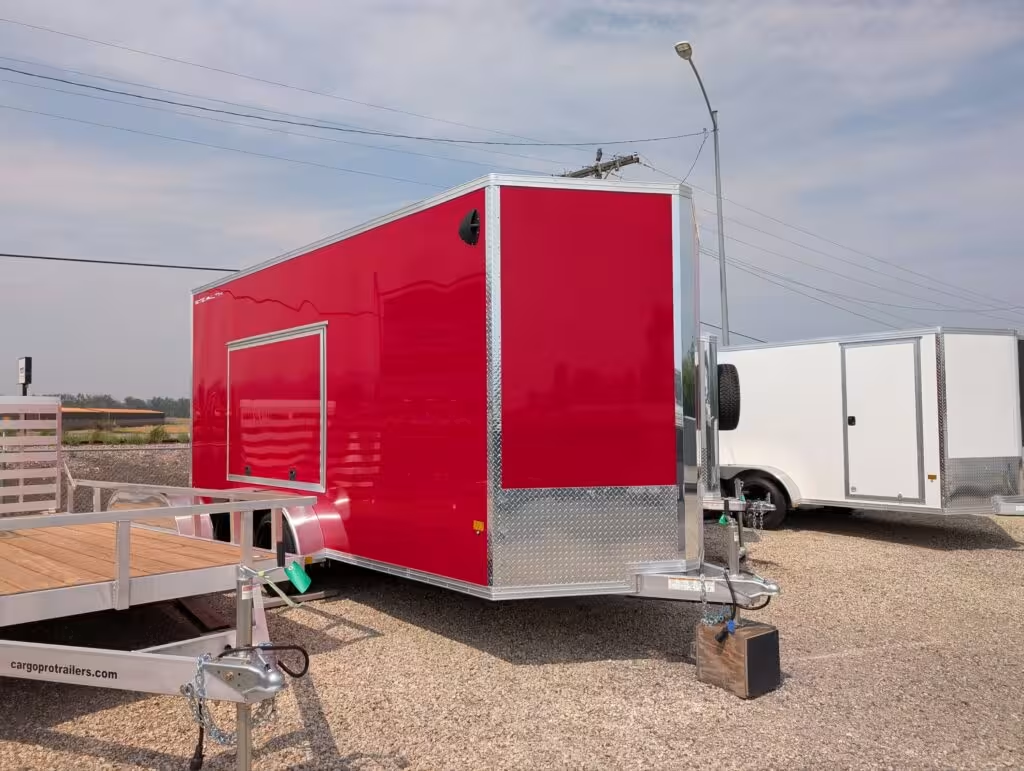
An enclosed trailer protects cargo from weather, road debris, theft, and unwanted attention. It is one of the most versatile trailer styles because the interior can be used for transportation, secure storage, business equipment, tools, recreation, or a custom mobile workspace.
Enclosed trailers are commonly used for:
- Contractor tools and jobsite equipment
- Landscaping and lawn-care equipment
- Motorcycles, ATVs, and side-by-sides
- Household moves
- Vendor and event equipment
- Mobile detailing and service businesses
- Race cars and motorsports equipment
- Snowmobiles and recreational gear
- Inventory and commercial deliveries
- Long-term secure storage
Advantages of an enclosed trailer
An enclosed body provides greater security and weather protection than an open trailer. The walls also make it possible to add shelving, cabinets, E-track, electrical systems, lighting, insulation, workbenches, windows, vents, and specialized equipment.
Considerations before buying
An enclosed trailer is typically heavier and creates more wind resistance than a similarly sized open trailer. Interior dimensions are also smaller than the advertised exterior size, and the rear door opening may be narrower or shorter than the interior.
Always verify:
- Interior width
- Interior height
- Interior cargo length
- Rear door opening width
- Rear door opening height
- Ramp capacity
- Payload
- GVWR
- Axle configuration
Utility and ATV Trailers
A utility trailer is an open trailer with a flat deck and low rails or sides. Utility trailers are practical, easy to load, and generally lighter than enclosed trailers of a similar size.
Utility trailers are commonly used for:
- ATVs and smaller side-by-sides
- Lawn mowers and landscaping equipment
- Building materials
- Appliances and furniture
- Firewood and property debris
- Motorcycles
- General household projects
- Farm and ranch equipment
Advantages of a utility trailer
An open deck makes it easy to load cargo from the rear, side, or above. Utility trailers also provide better visibility while backing and usually create less wind resistance than enclosed trailers.
Considerations before buying
Cargo is exposed to weather, road debris, and theft. Low rails can also limit the width of equipment, especially if wheels, mower decks, or attachments extend beyond the main body.
Measure the usable space between the rails and fenders, not just the trailer’s advertised width.
[BUTTON: Shop Utility and ATV Trailers]
Link: /product-category/utility-atv-trailers/
Equipment Trailers
Equipment trailers are built to carry machinery and concentrated loads. They commonly feature heavier frames, stronger decks, tandem axles, brakes, heavy-duty tie-down points, and ramps designed for tractors, skid steers, mini excavators, lifts, and construction equipment.
Equipment trailers are commonly used for:
- Skid steers
- Mini excavators
- Compact tractors
- Scissor lifts
- Construction machinery
- Landscaping equipment
- Vehicles and off-road equipment
- Commercial tools and attachments
What matters most on an equipment trailer?
Payload is important, but it is not the only consideration. Buyers should also evaluate:
- Deck width and length
- Deck height
- Ramp angle
- Ramp capacity
- Axle ratings
- Tire load ratings
- Frame construction
- Tie-down placement
- Equipment weight distribution
- Clearance around tracks, buckets, blades, and attachments
A machine may weigh less than the trailer’s payload limit but still be unsuitable if its weight is concentrated over a small section of the deck.
Car Haulers
A car hauler is designed to transport cars, pickups, race vehicles, restoration projects, and other automobiles. Car haulers may be open or enclosed.
Open car haulers
Open car haulers are generally lighter, more affordable, and easier to load. They work well when weather protection and cargo security are not primary concerns.
Enclosed car haulers
Enclosed car haulers protect vehicles from weather and road debris while offering room for tools, tires, parts, cabinets, and motorsports equipment.
Car hauler measurements that matter
Do not rely only on the vehicle’s published length and width. Verify:
- Tire-to-tire width
- Ground clearance
- Front and rear overhang
- Door clearance inside an enclosed trailer
- Trailer fender height
- Ramp angle
- Rear door opening
- Vehicle weight
- Weight distribution
- Space for straps and tie-downs
An enclosed car hauler may need an escape door or removable interior fender so the driver can exit after loading.
Dump Trailers
A dump trailer uses a hydraulic lifting system to unload loose or bulky material. Dump trailers are popular with contractors, landscapers, property owners, ranchers, and businesses that regularly move material.
Dump trailers are commonly used for:
- Gravel
- Soil
- Mulch
- Firewood
- Landscaping debris
- Roofing material
- Construction waste
- Farm and ranch materials
- Equipment transportation on properly configured models
Important dump trailer considerations
The volume of the dump box does not tell you how much material the trailer can legally or safely carry. Gravel, soil, wood, and debris can vary dramatically in weight.
Always calculate the expected material weight and compare it with the trailer’s payload. Pay attention to:
- GVWR
- Empty weight
- Payload
- Axle rating
- Hydraulic system
- Battery condition
- Floor thickness
- Side height
- Rear gate style
- Loading method
- Tarp system
- Hoist design
A dump trailer can reach its weight limit long before the box appears full.
Snowmobile Trailers
Snowmobile trailers are designed to transport sleds, winter gear, fuel containers, tools, and accessories. They may be open or enclosed and frequently use aluminum construction to reduce weight and resist corrosion.
Features may include:
- Front and rear ramps
- Drive-through loading
- Low deck heights
- Ski guides
- Track mats
- Fuel doors
- Helmet storage
- Interior lighting
- Vents
- Snow-resistant flooring
- Tie-down systems
The trailer must be long and wide enough for the number and arrangement of snowmobiles being transported. Measure the sleds with skis, tracks, windshields, and accessories installed.
Raft Trailers
Raft trailers are designed to simplify transporting, launching, retrieving, and storing inflated rafts. They often feature lightweight construction, flat decks, rollers, winches, or removable components.
The best size depends on:
- Inflated raft length and width
- Frame configuration
- Oars and fishing equipment
- Coolers and dry boxes
- Number of boats
- River access conditions
- Tow vehicle
- Storage space
A properly sized raft trailer can reduce setup time at the river and protect the raft from unnecessary dragging or repeated inflation and deflation.
Raft Trailers
Farm and ranch trailers cover a wide range of designs used to move fencing supplies, feed, equipment, tools, livestock-related materials, and property maintenance equipment.
Because farm and ranch loads vary considerably, buyers should focus on actual payload, deck dimensions, axle ratings, tires, brakes, ground clearance, and loading method rather than choosing a trailer based only on category.
Farm and Ranch Trailers
Farm and ranch trailers cover a wide range of designs used to move fencing supplies, feed, equipment, tools, livestock-related materials, and property maintenance equipment.
Because farm and ranch loads vary considerably, buyers should focus on actual payload, deck dimensions, axle ratings, tires, brakes, ground clearance, and loading method rather than choosing a trailer based only on category.
Tilt Trailers
A tilt trailer uses a deck that pivots toward the ground, reducing or eliminating the need for separate ramps. Tilt trailers are popular for equipment, vehicles, scissor lifts, and machines with limited ground clearance.
Advantages of a tilt deck
- Fewer loose ramps to handle
- Fast loading and unloading
- Gradual loading angle on many models
- Clear deck when the trailer is level
Things to verify
- Tilt angle
- Deck length
- Breakover angle
- Ground clearance
- Hydraulic or gravity operation
- Equipment weight concentration
- Locking mechanism
- Approach clearance
Deckover Trailers
A deckover trailer places the deck above the tires instead of between them. This creates a wider, flat loading surface without fenders interrupting the deck.
Deckover trailers are useful for pallets, construction materials, wide equipment, and loads that need to be placed from the side.
The tradeoff is a taller deck, which can create a steeper loading angle and a higher center of gravity.
Bumper-Pull and Gooseneck Trailers
A bumper-pull trailer connects to a receiver hitch near the rear bumper of the tow vehicle. Most utility, enclosed, dump, raft, snowmobile, and smaller equipment trailers use this configuration.
A gooseneck trailer connects to a hitch mounted in the bed of a pickup. Goosenecks are commonly used for longer or heavier equipment, livestock, flatbed, and commercial trailers.
Bumper-pull trailers are often preferred for:
- Lighter and medium-duty hauling
- SUVs and smaller pickups
- Easier vehicle compatibility
- Residential and recreational use
- Lower initial equipment cost
Gooseneck trailers are often preferred for:
- Heavy loads
- Long trailers
- Commercial hauling
- Improved maneuverability in some situations
- Greater stability with properly matched equipment
- Loads requiring a larger deck
A gooseneck still places significant weight on the tow vehicle. The pickup’s payload, rear axle rating, tires, bed-mounted hitch, and overall combination ratings must all be checked.

Part Two: Choosing the Right Trailer Size
Trailer dimensions are usually described by width and cargo length. A 7×16 enclosed trailer, for example, is approximately seven feet wide and sixteen feet long in the cargo area.
However, advertised dimensions do not always equal usable dimensions.
Measurements to verify before buying
- Interior width
- Interior height
- Interior length
- Width between wheel wells
- Rear opening width
- Rear opening height
- Side-door dimensions
- Deck width
- Deck height
- Ramp length
- Ramp angle
- Overall trailer width
- Overall trailer length
- Overall trailer height
Manufacturer designs, roof shapes, wall thicknesses, trim, flooring, ramps, and frame construction can change usable space.
Important: A trailer can have enough room inside but still have a door opening that is too small for the cargo.
Should I Buy a Larger Trailer Than I Need?
A small amount of additional room can make loading easier and provide space for future equipment. Buying too large, however, can add weight, cost, wind resistance, storage challenges, and towing requirements.
A practical approach is to choose enough room for:
- The largest expected cargo
- Safe tie-down access
- Normal loading error
- Attachments and accessories
- Shelving or cabinets
- Future but realistic needs
Do not buy a significantly larger trailer based only on the idea that you might eventually need the space. Make sure your current tow vehicle and storage location can handle the larger model.
Enclosed Trailer Sizing Guide
Use these size descriptions as a starting point. Actual specifications vary by model, manufacturer, axle package, roof height, frame material, and door configuration. Western States Trailer’s existing size guides provide more detailed dimensions, payload examples, door options, and common uses.
5×8 and 5×10 Enclosed Trailers
Best suited for light cargo, household projects, camping equipment, a limited selection of motorcycles, tools, and small business equipment.
These sizes are easy to store and maneuver but may be too narrow for larger ATVs, mowers, carts, or equipment.
Best for: Light-duty personal use and compact storage.
6×10 Enclosed Trailers
A 6×10 provides additional width while remaining compact and commonly uses a single axle. It works well for tools, motorcycles, smaller lawn equipment, vendor supplies, and light commercial use.
Best for: Buyers who want more usable width without moving to a large trailer.
6×12 Enclosed Trailers
The 6×12 is a popular multipurpose size for contractors, motorcycles, moving, lawn equipment, mobile businesses, and recreational gear. Many models remain manageable for regular towing and residential storage.
Best for: General-purpose hauling with a relatively compact footprint.
6.5×12 Enclosed Trailers
The extra width can make a meaningful difference for ATVs, wider equipment, shelving, and loading access. These trailers bridge the gap between traditional six-foot and seven-foot-wide models.
Best for: Buyers who need more side clearance but do not need a long tandem-axle trailer.
7×14 Enclosed Trailers
A 7×14 tandem-axle trailer offers a useful balance of interior room, stability, payload, and everyday maneuverability. It is popular with contractors, landscapers, mobile businesses, powersports owners, and customers hauling multiple motorcycles.
Best for: Work, business, recreation, and heavier multipurpose use.
7×16 Enclosed Trailers
A 7×16 adds cargo length without moving to a full-width car-hauler body. It offers room for equipment, shelving, multiple machines, business setups, and larger household moves.
Best for: Buyers who need substantial cargo room while retaining a narrower trailer body.
7.5×14 and 7.5×16 Enclosed Trailers
A 7.5-foot-wide trailer can provide added clearance for side-by-sides, off-road vehicles, and wider equipment. Specialized models may also include increased height, fuel doors, reinforced ramps, off-road tires, and trail-oriented storage.
Best for: Side-by-sides, powersports, wider cargo, and specialized off-road use.
8.5×16 Enclosed Trailers
An 8.5×16 provides a full-width cargo area commonly used for vehicles, side-by-sides, commercial equipment, mobile workspaces, and larger recreational loads.
The added width may bring the exterior close to the maximum common road width, and interior wheel boxes may affect loading.
Best for: Vehicles, wide equipment, larger side-by-sides, and commercial setups.
8.5×20 and 8.5×24 Enclosed Trailers
These larger enclosed trailers are commonly selected for vehicles, racing, multiple powersports machines, extensive contractor setups, mobile businesses, and cargo that requires more room for weight distribution.
The added length and weight require careful consideration of tow-vehicle ratings, hitch equipment, storage, turning space, and driving experience.
Best for: Car hauling, motorsports, multiple machines, and large commercial configurations.
What Size Trailer Do I Need for a Side-by-Side?
Measure the side-by-side at its widest, tallest, and longest points with all accessories installed. Include tires, mirrors, roof, windshield, bumpers, spare tire, suspension width, and any tracks.
Then compare those measurements with:
- Rear door opening
- Interior width
- Interior height
- Wheel-box clearance
- Ramp width
- Ramp rating
- Ramp angle
- Trailer payload
A side-by-side that technically fits inside the trailer may not fit through the rear opening. Taller machines may also require additional interior height or a reduced loading angle.
What Size Trailer Do I Need for a Car?
Measure the vehicle’s overall length, overall width, tire width, ground clearance, and weight. Then account for space needed to secure the vehicle and exit after loading.
For enclosed car hauling, verify:
- Door opening width and height
- Interior wheel-box width
- Interior fender height
- Escape-door location
- Ramp angle
- Vehicle door clearance
- Front overhang
- Tie-down access
- Trailer payload
Lower vehicles may need an extended ramp, transition flap, raised trailer tongue, loading blocks, or other solutions to prevent scraping.
Part Three: Trailer Weights and Ratings
What Do Trailer Weight Ratings Mean?
Weight ratings determine how much the trailer can carry and whether the tow vehicle, axles, hitch, tires, and other components can safely support the combination.
The most important principle is simple:
Never exceed the lowest-rated component in the towing system.
A trailer with a 7,000-pound GVWR cannot necessarily be towed by every vehicle rated for 7,000 pounds. The vehicle’s payload, hitch rating, rear axle rating, tire capacity, GCWR, and required equipment must also be considered.
Empty Weight
Empty weight, sometimes called curb weight or unloaded vehicle weight, is the approximate weight of the trailer without cargo.
Verify whether the listed empty weight includes:
- Spare tire
- Battery
- Ramps
- Tarp system
- Cabinets
- Added flooring
- Toolboxes
- Options
- Fuel
- Accessories
Anything permanently or temporarily added to the trailer consumes part of its payload.
GVWR: Gross Vehicle Weight Rating
- GVWR is the maximum allowable weight of the fully loaded trailer. It includes the trailer itself, cargo, equipment, accessories, fluids, tools, and anything else carried by the trailer.
- GVWR is a rating, not the trailer’s actual current weight.
Payload Capacity
Payload is the amount of weight the trailer can carry.
A simplified calculation is:
GVWR − Empty Trailer Weight = Theoretical Payload
Example:
7,000-pound GVWR − 1,800-pound empty weight = 5,200-pound theoretical payload
Added accessories reduce the remaining payload. The most accurate way to determine actual loaded weight is to use a certified scale.
GAWR: Gross Axle Weight Rating
GAWR is the maximum weight that may be carried by an axle or axle group, according to its rating.
Axle capacity alone does not determine trailer GVWR. Part of the loaded trailer weight is carried by the hitch, and the frame, coupler, tires, wheels, suspension, and brakes also have ratings.
Do not assume that two 3,500-pound axles automatically mean every trailer has a usable 7,000-pound payload.
Tongue Weight
Tongue weight is the downward force the trailer applies to the hitch.
For many conventional bumper-pull cargo and utility trailers, properly loaded tongue weight is commonly around 10% to 15% of the loaded trailer weight, but the correct target depends on the trailer and manufacturer. Too little tongue weight can contribute to instability and sway. Too much can overload the tow vehicle, receiver, hitch, rear axle, or tires.
Example:
A loaded bumper-pull trailer weighing 6,000 pounds might place approximately 600 to 900 pounds on the hitch if its manufacturer specifies the common 10% to 15% range.
That weight also counts against the tow vehicle’s payload.
Tow-Vehicle Payload
Tow-vehicle payload is the amount of weight the vehicle can carry in or on itself.
Payload may include:
- Driver
- Passengers
- Luggage
- Tools
- Accessories
- Cargo in the bed
- Hitch equipment
- Trailer tongue weight
A pickup can reach its payload or rear axle limit before reaching its advertised maximum trailer rating.
Look for the vehicle’s payload information on the certification or tire-loading label and consult the owner’s manual or manufacturer towing guide.
GCWR: Gross Combined Weight Rating
GCWR is the maximum permitted combined weight of the loaded tow vehicle and loaded trailer, according to the vehicle manufacturer.
The actual combination includes:
- Tow vehicle
- Driver and passengers
- Fuel
- Cargo
- Hitch equipment
- Trailer
- Trailer cargo
- Accessories
How Do I Know Whether My Vehicle Can Tow a Trailer?
Check all of the following:
- Maximum trailer rating
- GCWR
- Vehicle GVWR
- Vehicle payload
- Front and rear GAWR
- Hitch receiver rating
- Ball mount rating
- Hitch-ball rating
- Tongue-weight limit
- Tire load ratings
- Brake-controller requirements
- Manufacturer-required towing equipment
The correct towing limit is the lowest applicable rating after accounting for the vehicle’s actual configuration and load.
A vehicle may have different towing capacities depending on engine, transmission, axle ratio, drive system, wheelbase, cab, bed, suspension, cooling package, and factory towing equipment.
Do not determine towing capacity from the vehicle’s make and model alone. Use the VIN, door labels, owner’s manual, manufacturer towing guide, and installed equipment.

Part Four: Trailer Hitches and Connections
What Parts Connect a Trailer to a Tow Vehicle?
A conventional towing connection may include:
- Receiver
- Ball mount
- Hitch ball
- Trailer coupler
- Hitch pin and clip
- Safety chains
- Electrical connector
- Breakaway cable
- Weight-distribution equipment
- Sway-control equipment
Every component must be compatible and adequately rated.
Hitch Receiver
The receiver is attached to the tow vehicle and accepts a removable ball mount or other towing accessory.
Receiver openings commonly include:
- 1¼-inch receivers
- 2-inch receivers
- 2½-inch receivers
- 3-inch receivers
Receiver size does not by itself establish towing capacity. Always read the rating label and verify the vehicle manufacturer’s limits.
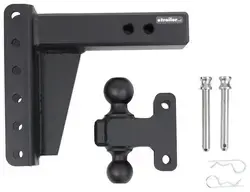
Ball Mount
The ball mount slides into the receiver and positions the hitch ball at the correct height.
Ball mounts may provide:
- A fixed rise or drop
- Adjustable height
- Multiple ball sizes
- Weight-distribution attachment points
- Pintle-hook combinations
The ball mount must be rated for both trailer weight and tongue weight.
Hitch-Ball Sizes
Common trailer ball sizes include:
- 1⅞ inches
- 2 inches
- 2 5⁄16 inches
The hitch ball must exactly match the coupler size. The ball’s weight rating must also meet or exceed the loaded trailer weight.
The correct ball size is generally stamped on the trailer coupler.
Trailer Coupler
The coupler is the trailer component that connects to the hitch ball.
Before towing:
- Verify the correct ball size.
- Lower the coupler fully onto the ball.
- Close and latch the coupler.
- Install the safety pin or lock.
- Raise the jack.
- Perform a lift test when appropriate.
- Confirm that the coupler cannot separate from the ball.
A coupler resting on top of the ball can appear connected without being properly latched.
Hitch Height and Trailer Level
The trailer should generally sit level when connected and loaded according to manufacturer guidance.
A trailer that is significantly nose-high or nose-low can affect:
- Axle loading
- Braking
- Tire wear
- Ground clearance
- Stability
- Ramp angle
- Tongue weight
An adjustable ball mount can help achieve the proper connection height.
Safety Chains
Safety chains provide a secondary connection if the coupler separates from the hitch.
For conventional bumper-pull trailers, the chains are commonly crossed beneath the coupler so they can help support the tongue if separation occurs. Attach each chain to an approved connection point on the tow vehicle, not to the removable ball mount unless that system is specifically designed for it.
Chains should have enough slack for turning but should not drag on the road.
Breakaway Cable
A breakaway system is designed to activate the trailer brakes if a braked trailer separates from the tow vehicle.
Attach the breakaway cable to a secure point on the tow vehicle that is independent of the coupler and safety chains. Do not wrap it around the hitch ball.
The breakaway battery must be charged and the system should be tested according to the trailer manufacturer’s instructions.
Weight-Distribution Hitches
A weight-distribution hitch uses spring bars to redistribute some of the load placed on the rear of the tow vehicle.
It may improve:
- Front-axle loading
- Steering response
- Headlight aim
- Vehicle attitude
- Stability
- Overall towing control
Weight-distribution equipment is not a substitute for staying within vehicle, hitch, axle, tire, and trailer ratings. It must be selected, installed, and adjusted for the specific tow vehicle and trailer.
Some vehicle or trailer manufacturers require, recommend, limit, or prohibit particular systems. Follow both manufacturers’ instructions.
Sway Control
Sway-control equipment is designed to help resist or reduce side-to-side trailer movement.
It cannot correct:
- An overloaded trailer
- Insufficient tongue weight
- Improper loading
- Excessive speed
- Worn tires
- Incorrect tire pressure
- Loose suspension components
- An undersized tow vehicle
- A mismatched hitch
Sway control should supplement a properly loaded and correctly matched towing combination.
Pintle Hitches
A pintle hitch uses a hook-and-ring connection and is frequently found on commercial, agricultural, military, and heavy-duty equipment trailers.
Pintle systems can tolerate rough surfaces and greater articulation, but they may produce more movement and noise than a traditional ball coupler.
The pintle hook, lunette ring, mounting hardware, and tow vehicle must all be appropriately rated.

Part Five: Axles, Suspension and Brakes
What Does a Trailer Axle Do?
Trailer axles support the trailer and cargo while connecting the wheels, suspension, hubs, and brakes to the frame.
An axle’s rating is only one part of the trailer’s total capacity. The trailer’s frame, suspension, coupler, tires, wheels, brakes, and other components must also support the load.
Single-Axle Trailers
Advantages
- Lower empty weight
- Lower purchase cost
- Easier maneuvering
- Fewer tires and bearings to maintain
- Compact storage
- Less tire scrubbing during tight turns
Considerations
- Lower capacity in many configurations
- Greater sensitivity to loading
- Less redundancy after a tire failure
- More noticeable movement over rough roads
- Brakes may not be included on every model
Single-axle trailers can be excellent when the trailer is correctly sized and the cargo remains comfortably within its ratings.
Tandem-Axle Trailers
A tandem-axle trailer has two axles positioned close together.
Advantages
- Greater capacity in many configurations
- Improved stability
- Better load distribution
- Smoother travel over irregular surfaces
- Additional tires supporting the trailer
- Frequently available with brakes on multiple wheels
Considerations
- Higher empty weight
- Higher cost
- More tires, bearings, and brake components
- Greater tire scrub during tight turns
- More difficult manual positioning
- Additional maintenance
A tandem axle does not remove the need for proper load placement or tongue weight.
Triple-Axle Trailers
Triple-axle configurations are used for some large and heavy trailers. They can provide greater capacity and load support but add weight, tire wear, maintenance, cost, and turning resistance.
Triple-axle trailers require careful matching with an appropriate tow vehicle and hitch system.
Leaf-Spring Suspension
Leaf-spring suspension uses stacked steel springs to support the axle.
Common advantages
- Proven design
- Widely available parts
- Straightforward service
- Suitable for heavy loads
- Load equalization available on many tandem systems
Common considerations
- More moving parts
- Bushings, shackles, bolts, and equalizers can wear
- Can be noisier
- Requires periodic inspection
Torsion Suspension
Torsion axles use rubber cords inside the axle tube to provide suspension movement.
Common advantages
- Independent wheel movement
- Quiet operation
- Low-profile installation
- Fewer exposed suspension parts
- Smooth ride in many applications
Common considerations
- Alignment or damage may require axle replacement
- Less field-serviceable
- Load sharing differs from equalized leaf-spring systems
- Replacement specifications must closely match the trailer
Neither suspension is automatically better for every buyer. The best choice depends on trailer use, load, road conditions, service access, and manufacturer design.
Straight and Drop Axles
A straight axle generally places the trailer higher, which can improve ground clearance.
A drop axle lowers the trailer deck, which may improve loading angle, stability, and ease of entry.
The tradeoff is reduced ground clearance beneath portions of the trailer.

Electric Trailer Brakes
Electric trailer brakes use an electrical signal from a brake controller in the tow vehicle to activate the trailer brakes.
Advantages include adjustable braking force and the ability to coordinate trailer braking with the tow vehicle.
Electric brakes require:
- Compatible trailer brakes
- Proper wiring
- A brake controller
- Correct controller adjustment
- Functional breakaway system
- Regular inspection and adjustment where applicable
Surge Brakes
Surge brakes use the forward pressure of the trailer against the hitch actuator to apply hydraulic trailer brakes. They are common on some boat, rental, and specialty trailers.
A surge actuator automatically responds as the trailer pushes toward the tow vehicle during deceleration.
Because the system operates mechanically and hydraulically at the coupler, it may not require the same in-cab controller used by standard electric brakes. Compatibility with backing, breakaway requirements, and tow-vehicle systems should still be verified.

Brake Controllers
A brake controller sends power to electric trailer brakes.
Proportional controllers
Proportional controllers attempt to match trailer braking to the tow vehicle’s deceleration. They often provide smoother braking under varying conditions.
Time-delayed controllers
Time-delayed controllers increase trailer-brake output according to preset timing and gain settings.
The controller must be adjusted for the trailer’s loaded condition. Too little output can make the tow vehicle perform too much of the braking. Too much output can cause the trailer brakes to lock or engage harshly.

Part Six: Frames, Floors and Construction
Aluminum vs. Steel Trailers
Both aluminum and steel can produce durable trailers when properly engineered and manufactured.
Material alone does not determine quality. Examine the complete design, including frame dimensions, crossmember spacing, weld quality, fasteners, flooring, roof, wall structure, coatings, wiring protection, warranty, and intended use.
Aluminum trailers
Potential advantages include:
- Lower empty weight
- Increased available payload in some configurations
- Corrosion resistance
- Easier towing for some vehicles
- Higher resale appeal in some markets
Potential considerations include:
- Higher initial cost
- Specialized repair techniques
- Different fatigue and reinforcement requirements
- Mixed-material corrosion concerns where dissimilar metals meet
Steel trailers
Potential advantages include:
- Lower initial cost in many categories
- High strength
- Familiar repair methods
- Broad model availability
- Suitability for heavy-duty construction
Potential considerations include:
- Higher empty weight
- Greater vulnerability to corrosion if coatings are damaged
- Ongoing paint and rust maintenance
- Lower available payload when compared with some similarly rated aluminum models
Tube, Channel and Angle Construction
Trailer frames may use tube, channel, I-beam, formed rail, angle, or combinations of these materials.
Rather than assuming one shape is always superior, evaluate:
- Material thickness
- Structural dimensions
- Crossmember spacing
- Reinforcement
- Weld quality
- Corrosion protection
- Trailer rating
- Intended load
- Manufacturer reputation
- Warranty
Crossmember Spacing
Crossmembers support the floor and distribute cargo weight into the frame.
Closer spacing can provide added floor support, especially for concentrated loads, vehicles, machinery, shelving, and commercial equipment.
The correct spacing depends on the floor material, frame design, cargo, and manufacturer engineering.
Trailer Flooring
Common floor materials include:
- Treated lumber
- Engineered wood
- Plywood
- Aluminum plank
- Steel
- Rubber or coin flooring
- Composite materials
Choose flooring based on:
- Cargo weight
- Point loading
- Moisture exposure
- Chemical exposure
- Slip resistance
- Cleaning requirements
- Equipment tracks or tires
- Future replacement
- Interior use
A decorative floor covering does not increase the structural capacity of the floor beneath it.
Roof and Wall Construction
For enclosed trailers, consider:
- Roof material
- Roof seams
- Roof bows
- Wall-post spacing
- Exterior skin thickness
- Interior wall lining
- Fastener type
- Adhesive-bonded versus mechanically fastened panels
- Ventilation
- Insulation options
- Water sealing
- Snow-load considerations
Buyers planning roof racks, air conditioners, solar panels, awnings, or suspended equipment should discuss reinforcement before ordering the trailer.

Part Seven: Trailer Doors, Gates and Loading Systems
Ramp Door or Barn Doors: Which Is Better?
A ramp door is generally best for wheeled cargo. Barn doors are often best for hand-loaded cargo, forklift access, and locations with limited space behind the trailer.
The right choice depends on how the trailer will be used most often.
Rear Ramp Doors
Rear Ramp Doors
A ramp door folds down to create a loading surface.
Best for:
- ATVs
- Side-by-sides
- Motorcycles
- Lawn equipment
- Rolling toolboxes
- Carts
- Vehicles
- Mobile equipment
Verify:
- Ramp width
- Ramp length
- Ramp capacity
- Transition flap
- Loading angle
- Cable or spring condition
- Surface traction
- Ground clearance
- Rear opening dimensions
A ramp must be rated for the equipment and the way the load is applied. A machine’s total weight may be supported by only two wheels, tracks, or a small contact area during loading.
Barn Doors
Barn doors swing outward from the center.
Best for:
- Boxes
- Tools
- Furniture
- Pallets
- Contractor equipment
- Hand-loaded cargo
- Forklift access
- Tight loading areas
Barn doors require less deployment space behind the trailer than a full ramp. Portable ramps can sometimes be used for occasional wheeled cargo.
Double Doors and Combination Doors
Some trailers offer a rear ramp with an additional door function, or barn doors with removable ramps.
Combination systems can provide flexibility for buyers who alternate between rolling equipment, pallets, and general cargo.
Side Doors
A side-entry door provides access without opening the rear.
Consider:
- Door width
- Door height
- Step height
- Hinge direction
- Bar lock
- RV-style latch
- Interior clearance
- Location relative to shelving and cargo
A wider side door can be valuable for contractors, mobile businesses, and equipment access.
Escape Doors
Escape doors are used primarily on enclosed car haulers. They allow the vehicle door to open through the trailer wall or provide an opening through which the driver can exit.
Verify the escape door’s position against the exact vehicle being transported. Door location, vehicle wheelbase, fender height, and loading position all matter.
Tri-Gates and Landscape Gates
A tri-gate may divide the rear gate into multiple sections, allowing it to function as a ramp, gate, or partial opening.
These systems can be useful for landscaping, loose material, equipment, and cargo that needs flexible loading access.
Spreader and Double-Acting Dump Gates
Dump trailer gates may swing from the side, spread material from the bottom, or provide more than one operating mode.
The correct gate depends on whether the trailer will unload gravel, mulch, debris, equipment, firewood, or other materials.
Slide-In and Stand-Up Ramps
Equipment ramps may:
- Slide beneath the deck
- Store vertically
- Fold
- Attach to the rear
- Move along a ramp bar
- Form part of a full-width gate
Compare ramp length, width, capacity, weight, spacing, and loading angle.

Part Eight: Tires, Wheels, Hubs and Bearings
Trailer Tires
Trailer tires support the trailer’s loaded weight and experience different forces than tow-vehicle tires.
Always verify:
- Correct tire size
- Load range
- Maximum load
- Recommended inflation
- Speed rating
- Condition
- Age
- Matching tires
- Proper clearance
- Valve-stem condition
Inflate tires according to the trailer and tire manufacturer’s guidance when the tires are cold. Do not use appearance alone to judge pressure.

Tire Load Capacity
The combined capacity of the tires must support the load assigned to them, but tire capacity does not increase the trailer’s GVWR or axle ratings.
A higher-rated replacement tire does not turn the trailer into a higher-capacity trailer.
Tire Age and Condition
Inspect for:
- Cracks
- Bulges
- Cuts
- Uneven wear
- Flat spots
- Exposed cords
- Low tread
- Weathering
- Embedded objects
- Air loss
Trailer tires can age even when tread remains because many trailers sit for long periods.
Lug Nuts and Wheel Torque
Incorrect wheel torque can damage studs, distort wheels, or allow a wheel to loosen.
Use the trailer or component manufacturer’s:
- Torque specification
- Tightening pattern
- Re-torque procedure
- Service interval
Recheck wheel torque after wheel installation and according to the manufacturer’s instructions.
Hubs and Wheel Bearings
Wheel bearings allow the hubs and wheels to rotate around the axle spindle.
Bearing service may include:
- Cleaning
- Inspection
- Grease replacement
- Seal replacement
- Adjustment
- Hub inspection
- Brake inspection
Service intervals depend on axle manufacturer, mileage, storage, road conditions, water exposure, and trailer use.
Excessive heat, noise, looseness, grease leakage, or uneven wheel movement should be investigated promptly.
Spare Tires
A properly sized and rated spare tire can prevent a minor tire issue from ending a trip.
Also carry:
- Correct lug wrench
- Jack rated for the loaded trailer
- Safe jacking instructions
- Wheel chocks
- Reflective warning devices
- Tire-pressure gauge
Make sure the jack can fit beneath the manufacturer-approved lifting point when a tire is flat.

Part Nine: Trailer Wiring and Electrical Systems
Four-Pin and Seven-Pin Connectors
A four-pin connector generally supports basic trailer lighting:
- Left turn and brake light
- Right turn and brake light
- Running lights
- Ground
A seven-pin connector can support additional functions such as:
- Electric trailer brakes
- Battery charging
- Reverse circuit
- Auxiliary power
Wiring assignments should be verified rather than assumed, especially on modified or older trailers.
Trailer Lights
Before every trip, test:
- Running lights
- Brake lights
- Turn signals
- Clearance lights
- License-plate light
- Reverse lights, when equipped
- Interior or loading lights as needed
Inspect connectors and wiring for corrosion, pin damage, loose grounds, exposed conductors, and abrasion.
Trailer Battery
Trailer batteries may operate:
- Breakaway brakes
- Dump hydraulics
- Jacks
- Interior lighting
- Winches
- Accessories
Different systems place very different demands on a battery. A small breakaway battery is not a substitute for a properly sized dump, winch, or accessory battery.
Keep batteries charged and inspect terminals, wiring, mounting, and protective enclosures.

Part Ten: Loading and Securing a Trailer
How Should Weight Be Distributed?
Cargo should be positioned so the trailer remains within its GVWR, axle ratings, tire ratings, coupler rating, hitch limits, and manufacturer-specified tongue weight.
For many conventional bumper-pull cargo trailers, a loaded tongue weight in the common 10% to 15% range promotes stability, but the trailer manufacturer’s guidance controls.
Avoid placing heavy cargo at the extreme rear. Rear-heavy loading can reduce tongue weight and contribute to sway.
Load Heavy Items Low
Place heavy cargo as low as practical to reduce the center of gravity.
Tall or top-heavy loads can increase body movement and rollover risk during:
- Turns
- Lane changes
- Emergency maneuvers
- Crosswinds
- Uneven roads
Balance Side to Side
Avoid placing most of the cargo on one side.
Uneven loading can affect:
- Tire loading
- Suspension travel
- Braking
- Handling
- Bearing wear
- Trailer lean
A scale is the most reliable way to verify actual axle and total weights.
Use Proper Tie-Down Points
Secure cargo to structural tie-down points designed for the load.
Common systems include:
- D-rings
- E-track
- Recessed floor anchors
- Stake pockets
- Rub rails
- Welded chain spools
- Wheel chocks
- Wheel nets
- Axle straps
Interior wall panels, shelving, door hardware, and light-duty hooks are not automatically structural tie-down points.
Choosing Straps and Chains
Tie-down equipment should be selected according to the cargo, trailer, anchor points, and applicable requirements.
Inspect for:
- Cuts
- Abrasion
- Broken stitching
- Bent hooks
- Corrosion
- Stretched links
- Damaged ratchets
- Missing identification tags
- Heat or chemical damage
Secure loose strap ends so they cannot flap, drag, contact tires, or become tangled.
Recheck the Load
Stop after beginning a trip to inspect the load and towing connection. Cargo can settle, straps can loosen, and equipment can shift.
Continue checking periodically and after:
- Rough roads
- Sudden braking
- Significant turns
- Weather changes
- Long stops
- Any noticeable handling change

Part Eleven: Towing and Driving
How Does Towing Change the Way a Vehicle Drives?
A trailer increases total weight, length, stopping distance, turning radius, and the space required to merge or change lanes.
When towing:
- Accelerate gradually.
- Increase following distance.
- Brake earlier.
- Make wider turns.
- Reduce speed for curves.
- Allow more room when merging.
- Watch trailer tires near curbs and shoulders.
- Avoid sudden steering inputs.
- Account for wind and passing trucks.
- Use lower gears or tow modes as directed by the vehicle manufacturer.
Trailer Sway
Trailer sway is side-to-side movement that can grow if the trailer is improperly loaded, traveling too fast, affected by wind, or experiencing a mechanical or equipment problem.
Common contributors include:
- Insufficient tongue weight
- Rear-heavy loading
- Excessive speed
- Crosswinds
- Passing large vehicles
- Incorrect tire pressure
- Worn suspension
- Improper hitch setup
- Sudden steering
- An undersized or overloaded tow vehicle
If sway begins, avoid abrupt steering or panic braking. Gradually reduce speed while maintaining control. If the vehicle has a compatible brake controller, appropriate manual trailer-brake input may help stabilize the trailer. Follow the tow-vehicle, trailer, hitch, and brake-controller manufacturers’ instructions. NHTSA investigations and trailer-brake documentation recognize slowing and trailer-brake application as methods that can help mitigate sway in compatible systems.
Pull over safely and identify the cause before continuing.
Driving Downhill
Long downhill grades can overheat brakes.
Use the tow vehicle’s recommended:
- Tow/haul mode
- Lower transmission gear
- Engine braking
- Exhaust brake, when equipped
- Speed-control method
Do not ride the brakes continuously. Follow the vehicle manufacturer’s mountain-driving instructions.
Driving in Wind
Enclosed trailers and other tall trailers have a large side profile and can be affected by crosswinds.
Reduce speed and maintain additional space. Be particularly cautious:
- At bridge openings
- When leaving protected terrain
- Near large trucks
- On exposed highways
- During sudden weather changes
Postpone the trip when conditions exceed your experience or the combination’s capability.
Turning With a Trailer
Trailer wheels follow a tighter path than the tow vehicle’s front wheels.
Make turns wider while staying within your lane. Watch the trailer’s:
- Inside tires
- Fenders
- Rear corner
- Side clearance
- Roof clearance
- Tail swing
Long trailers can also swing outward at the rear during sharp turns.
How Do I Back Up a Trailer?
A simple technique is to place one hand at the bottom of the steering wheel. Move your hand in the direction you want the trailer to travel.
Use small steering corrections and move slowly.
Backing tips
- Begin with the tow vehicle and trailer as straight as possible.
- Use a spotter when available.
- Agree on hand signals before moving.
- Stop if the spotter disappears from view.
- Get out and look whenever uncertain.
- Use mirrors on both sides.
- Pull forward and reset rather than forcing a bad angle.
- Practice in an empty parking area.
Short trailers react more quickly to steering than long trailers.

Part Twelve: Pre-Trip Trailer Checklist
What Should I Check Before Towing?
Use this checklist before every trip.
Tow vehicle
- Vehicle is rated for the loaded trailer
- Tires are properly inflated
- Mirrors provide adequate visibility
- Cargo and passengers remain within payload
- Brake controller is connected and adjusted
- Fuel and fluid levels are appropriate
- No warning lights indicate a towing-related problem
Hitch connection
- Correct ball size
- Coupler fully seated
- Coupler latched and pinned
- Ball mount and hitch pin secured
- Safety chains connected
- Breakaway cable attached independently
- Jack fully raised
- Trailer sits at the proper height
- Weight-distribution components secured, when used
Trailer
- Tires properly inflated
- No tire damage
- Lug nuts checked according to manufacturer guidance
- Wheel bearings show no warning signs
- Lights operate
- Brakes operate
- Breakaway system functional
- Doors and gates latched
- Ramps secured
- Battery charged
- License plate secure
- Spare tire ready
- Cargo tied down
- Load positioned correctly
- GVWR and component ratings not exceeded
Final walk-around
- Walk completely around the tow vehicle and trailer before moving. Look above, below, and between the vehicles.

Part Thirteen: Trailer Maintenance
How Often Should a Trailer Be Serviced?
Service needs depend on the trailer, axle manufacturer, mileage, load, road conditions, storage, climate, and frequency of use.
Review the owner’s manuals for the trailer, axles, brakes, coupler, jack, hydraulic system, tires, and installed equipment.
Routine inspection areas
- Tires
- Lug nuts
- Wheels
- Hubs
- Bearings
- Brakes
- Breakaway system
- Suspension
- Axles
- Coupler
- Safety chains
- Jack
- Lights
- Wiring
- Frame
- Welds
- Floor
- Roof
- Doors
- Ramps
- Tie-down points
- Hydraulic system
- Battery
Warning Signs That a Trailer Needs Service
Schedule an inspection when you notice:
- Uneven tire wear
- Hot hubs
- Grinding or squealing
- Weak or uneven braking
- Trailer pulling to one side
- Excessive bouncing
- New sway or instability
- Loose suspension parts
- Cracked welds
- Damaged flooring
- Water leaks
- Flickering lights
- Grease leakage
- Hydraulic problems
- Coupler movement
- Bent ramps or gates
Do not continue towing when a defect could affect control, braking, wheel retention, structural integrity, or cargo security.
Storing a Trailer
For longer-term storage:
- Clean the trailer.
- Remove corrosive material.
- Dry the interior.
- Check roof and door seals.
- Inflate tires properly.
- Protect tires from prolonged sun exposure where practical.
- Chock the wheels.
- Secure doors and ramps.
- Maintain batteries.
- Protect electrical connectors.
- Avoid storing sensitive cargo inside.
- Inspect periodically for water, pests, corrosion, and tire loss.
Follow manufacturer guidance before lifting or supporting a trailer during storage.

Part Fourteen: Buying, Renting and Custom Ordering
Should I Buy or Rent a Trailer?
Renting may be the better choice when:
- The project is temporary.
- You tow only occasionally.
- You want to test a trailer style.
- You do not have storage.
- Your needs change from project to project.
- You need specialized equipment for one job.
Buying may make more sense when:
- You use the trailer regularly.
- You need immediate availability.
- You store tools or equipment in it.
- You want custom features.
- Rental scheduling limits your work.
- Long-term rental cost approaches ownership cost.
Western States Trailer offers maintained trailer rentals in Missoula for projects such as moving equipment, landscaping, construction, vehicle hauling, and general utility work.
New or Used Trailer?
Benefits of buying new
- Manufacturer warranty
- Known history
- Current features
- Custom-order options
- New tires, brakes, wiring, and components
- Financing availability
- Fewer immediate repairs
Benefits of buying used
- Lower purchase price
- Reduced initial depreciation
- Immediate availability
- Existing upgrades
- Potential value for occasional use
What to inspect on a used trailer
- VIN and title
- Frame
- Welds
- Axles
- Suspension
- Brakes
- Tires and tire age
- Wheels and studs
- Bearings and hubs
- Coupler
- Safety chains
- Jack
- Wiring and lights
- Breakaway system
- Floor
- Roof and walls
- Doors and ramps
- Hydraulic components
- Signs of overloading
- Signs of collision damage
- Signs of water intrusion
- Modifications
A low price can be offset by tires, brakes, bearings, wiring, floor replacement, structural work, or missing paperwork.
When Should I Custom-Order a Trailer?
A custom order is worth considering when standard inventory does not provide the required:
- Height
- Width
- Length
- Axle capacity
- Door configuration
- Ramp capacity
- Flooring
- Windows
- Ventilation
- Lighting
- Electrical system
- Cabinets
- Tie-downs
- Color
- Insulation
- Reinforcement
- Roof equipment
- Business layout
- Powersports access
Plan the complete use before ordering. Adding reinforcement, wiring, windows, roof supports, and structural equipment during manufacturing is often easier than modifying a finished trailer.
Questions to Ask Before Buying
Bring these questions to the dealership:
- What is the trailer’s actual empty weight?
- What is its GVWR?
- What is the available payload?
- What are the axle ratings?
- Are brakes installed on all applicable wheels?
- What are the tire load and speed ratings?
- What are the interior dimensions?
- What are the rear opening dimensions?
- What is the ramp capacity?
- What hitch-ball size is required?
- What tongue weight should I expect?
- What warranty is included?
- Where can the trailer be serviced?
- Are replacement parts readily available?
- Will my tow vehicle remain within every applicable rating?
- What maintenance is required?
- Which accessories should be installed before delivery?
- Is a smaller, larger, or different trailer better for my cargo?
Part Fifteen: Trailer Registration and Legal Considerations
Registration, title, brake, lighting, equipment, licensing, and commercial-use requirements vary by state and by trailer configuration.
Montana requires trailers to be registered, and its Motor Vehicle Division states that trailers subject to its general trailer category are permanently registered. Montana also requires titles for trailers and semitrailers. Current fees and procedures should be confirmed directly with the Montana Motor Vehicle Division or the buyer’s county treasurer.
Buyers outside Montana should check the laws in their home state and every jurisdiction relevant to their use.
Requirements that may depend on the trailer or use
- Registration
- Title
- Permanent or annual plates
- Brakes
- Breakaway equipment
- Safety chains
- Lighting
- Reflectors
- Maximum dimensions
- Weight limits
- Commercial vehicle rules
- Driver licensing
- USDOT registration
- Insurance
- Cargo securement
- Oversize permits
- Interstate operation

Trailer Glossary
Axle
The structural component that supports the trailer through the wheels, hubs, suspension, and related equipment.
Ball Mount
The removable component that slides into a receiver and holds the hitch ball.
Brake Controller
A device that controls electric trailer-brake output from the tow vehicle.
Breakaway System
A battery-powered system designed to activate trailer brakes if a braked trailer separates from the tow vehicle.
Coupler
The trailer component that connects to the hitch ball or other towing connection.
Deck Height
The vertical distance from the ground to the trailer’s loading deck.
Empty Weight
The approximate weight of the trailer without cargo.
GAWR
Gross Axle Weight Rating. The maximum rated load for an axle or axle group.
GCWR
Gross Combined Weight Rating. The maximum rated combined weight of the loaded tow vehicle and loaded trailer.
GVWR
Gross Vehicle Weight Rating. The maximum rated weight of the fully loaded trailer or vehicle.
Payload
The amount of cargo weight the trailer can carry after accounting for the trailer’s own weight and installed equipment.
Pintle Hitch
A heavy-duty towing connection that uses a hook and lunette ring.
Receiver
The hitch component attached to the tow vehicle that accepts a ball mount or other towing accessory.
Tongue Weight
The downward force a bumper-pull trailer applies to the hitch.
Torsion Axle
An axle with internal rubber cords that provide suspension movement.
Weight-Distribution Hitch
A hitch system that uses spring bars to redistribute load across the towing combination.

Frequently Asked Trailer Questions
What is the most versatile trailer size?
There is no universal best size, but 6×12, 7×14, and 7×16 enclosed trailers are commonly selected for multipurpose use. The best size depends on cargo dimensions, payload, door clearance, tow vehicle, and future needs.
Is a tandem-axle trailer safer than a single-axle trailer?
A tandem-axle trailer may provide greater stability, capacity, and support, but safety depends on the complete trailer design, proper maintenance, correct loading, suitable towing equipment, and staying within all ratings. A properly matched single-axle trailer can be the better choice for a light load.
Can I tow a trailer at its full GVWR?
Only when the tow vehicle, hitch, receiver, tires, brakes, axles, payload, GCWR, and every other applicable component remain within their ratings. The trailer’s GVWR does not determine whether a particular vehicle can tow it.
Does trailer tongue weight count against vehicle payload?
Yes. Tongue weight is carried by the tow vehicle and is part of the vehicle’s payload calculation along with passengers, cargo, accessories, and hitch equipment.
How much tongue weight should a trailer have?
Many conventional bumper-pull cargo trailers commonly use approximately 10% to 15% of loaded trailer weight, but the correct amount depends on the manufacturer and trailer. Measure rather than guess.
Do I need trailer brakes?
Brake requirements vary by trailer weight, configuration, state, and use. Even where not legally required, trailer brakes may be recommended or required by the tow-vehicle or trailer manufacturer. Verify the laws and manufacturer instructions that apply to your combination.
Do I need a brake controller?
A standard electric-brake trailer generally requires a compatible brake controller. Some vehicles have an integrated controller, while others require an aftermarket unit. Surge-brake trailers operate differently.
What hitch ball does my trailer need?
Use the exact ball size stamped on the coupler. Common sizes include 1⅞ inches, 2 inches, and 2 5⁄16 inches. The ball, mount, and receiver must also have adequate weight ratings.
Should an enclosed trailer sit level while towing?
A trailer should generally sit level according to manufacturer guidance. A substantially nose-high or nose-low trailer can affect tongue weight, axle loading, braking, clearance, and tire wear.
Is aluminum better than steel?
Aluminum is generally lighter and more corrosion resistant, while steel often costs less and is familiar to repair. Overall design and build quality matter more than material alone.
What is the difference between payload and GVWR?
GVWR is the maximum rated weight of the loaded trailer. Payload is the amount of weight available for cargo after subtracting the trailer’s actual empty weight and installed equipment.
How do I stop trailer sway?
Reduce speed gradually, avoid abrupt steering or braking, and use appropriate trailer-brake input when the system and manufacturer instructions permit. Pull over safely and correct the cause before continuing. Common causes include poor weight distribution, insufficient tongue weight, excessive speed, wind, tire problems, and incorrect hitch setup.
How often should trailer bearings be serviced?
The correct interval depends on the axle manufacturer, trailer use, mileage, storage, load, and water exposure. Follow the axle and trailer manuals and have the bearings inspected whenever heat, looseness, noise, or grease leakage is detected.
Can I use a trailer tire with a higher load rating?
A properly sized higher-rated tire may be acceptable when approved by the trailer or tire manufacturer, but it does not increase the trailer’s GVWR, axle rating, frame capacity, or legal payload.
Is it better to buy or rent a trailer?
Rent when the need is occasional, temporary, or uncertain. Buy when the trailer will be used regularly, customized, stored with equipment, or needed without rental scheduling.

Get Help Choosing the Right Trailer
You do not have to calculate every measurement and rating by yourself.
Bring Western States Trailer the following information:
- Tow-vehicle year, make, model, and configuration
- Vehicle payload and towing information
- Cargo dimensions
- Cargo weight
- Photos of the cargo
- Expected travel distance
- Loading and unloading method
- Storage limitations
- Desired features
- Current and future uses
Our team can help you compare trailer types, dimensions, payloads, door configurations, axles, materials, and towing requirements. If the right trailer is not currently in stock, we can also discuss rentals, custom orders, financing, trade-ins, and future inventory.

About Western States Trailer
Western States Trailer is a family-owned trailer dealership in Missoula, Montana, serving trailer buyers throughout Montana, Idaho, Washington, and the Northwest. Since 1991, the company has helped customers find dependable trailers for work, business, recreation, farming, property care, transportation, and outdoor adventure.
In addition to trailer sales, Western States Trailer provides trailer rentals, custom ordering, financing, trade-ins, parts, maintenance, and repair support.
Reviewed by the trailer specialists at Western States Trailer.
Last reviewed: [September 2026]